







“Representation is a crucial location of struggle for any exploited and oppressed people asserting subjectively and decolonization of the mind.” —Bell Hooks
Renowned activist and author Gloria Jean Watkins, otherwise known as Bell Hooks, wrote this in one of her books, Art Matters. As a Black female activist, Hooks focused on the connection between race, gender, and capitalism. One of the many things Hooks spoke about was the importance of representation to marginalized people, and its significance in shaping the eyes of the youth.
For example, a lack of representation can affect your social perception and your ability to have a place of belonging. When I was around 10 years old, I emigrated to this country from Guyana. I remember how rare it was to see someone that looked like me on television. I spent a lot of time getting to know popular TV shows, discovering Nickelodeon and Disney and watching any and all forms of media. It was a new world to me, yet I couldn’t see a place for myself. Additionally, knowing that I came from a place where I could turn around and see someone with the same skin as me, to not, made the future feel scary. I was once in a place full of color, and it suddenly dimmed.
Children are impressionable, especially those who enter a new world. Foundations start at a young age, so it’s necessary to build support and have children know that a world with people like them exists.
It is of utmost importance for the youth to see people with the same skin tone as themselves – to see people with similar backgrounds to them, whether they’re succeeding or just existing. Animated films like Mulan, The Princess and the Frog, and even Aladdin are impactful to the eyes of children. We live in a world where communicating with people halfway around the world can be done within the blink of an eye, yet seeing someone who looks like you in the media is still a challenge.
An important factor in a young child’s life is hope: hope for a future, hope to live in a world that acknowledges their being. Humans want to belong. However, without representation, it is not possible but improbable.
Obviously times have changed…right?
No. They have not.
It’s normal to see people of color (POC), either when you’re scrolling out in the streets, or even on social media. But to be aware of the challenges they face is not often common. Moreover, generalized media is not typically diverse. They have POC but not their voices. For example, TV shows like The White Lotus and Stranger Things lack that representation. The White Lotus favored its wealthy white characters, while portraying those of colors as their workers. Likewise, in Stranger Things, Caleb McLaughlin had severe limitations in his character despite being the main character. There were limited screentimes, and he often had shorter lines compared to other main characters. Even the queer stories lacked depth, as its romances were always off-screen and never had a voice of its own.
A 2025 UCLA study conducted the diversity in Hollywood, both on and off camera. They found a decline of women and forms of disability in television. The study concluded that four-fifths of actors in popular shows are white. There were only forty-nine women as creators. A decrease of films with a woman writer at 41% in 2023 to 37% in 2024.
However, not only are people of color — especially women of color (WOC), being excluded from roles. The study indicated that in 2024, Latinx and Asians were also underrepresented in the media. There were 49.0% White leads on screen, and only 28% of directors were women. This lack of representation is severely harmful. It can—and will—affect the growth and mind of young children.
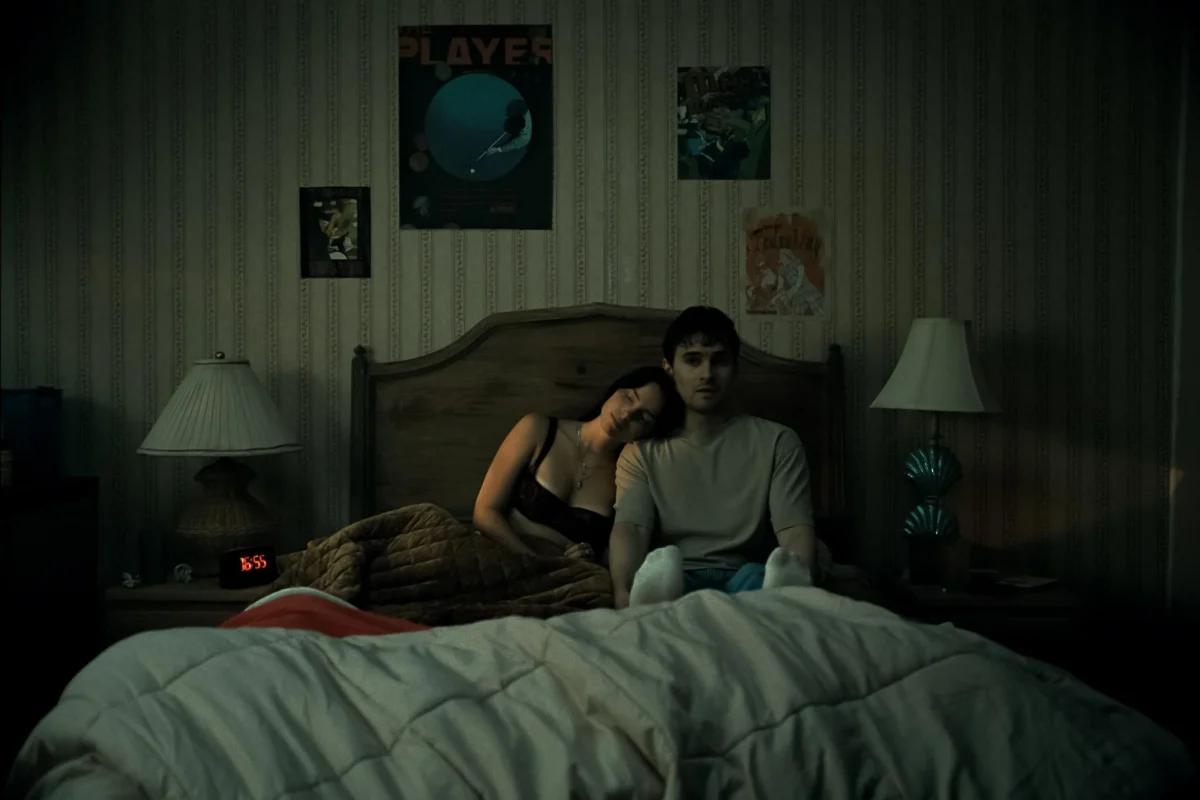
For example, one of the most recent cases of underrepresentation is the literature classic, Wuthering Heights by Emily Bronte under the pseudonym, Ellis Bell, recently being adapted into a film. It was previously adapted into a 1939 film directed by Laurence Olivier, and another in 2011 directed by Andrea Arnold. Much like the new adaptation, they received multitudes of criticism. However, they were well received as a truer version of Bronte’s vision. The 2026 adaptation by Emerald Fennel showcased a poorly understood piece of literature, driven by romance and lust.
Rick Chang, of the New Yorker, criticizes the actors, Margot Robbie and Jacob Elordi , for holding “no deeper air of tragic or romantic inevitability.” Other than the lack of connection and passion, Heathcliff’s role is portrayed by a White European man. This is another case of characters who despite their author’s purpose, are not accurately represented. Healthcliff is meant to be racially ambiguous. His story surrounds the troubles he experiences as someone from a lower class.
Wuthering Heights is not meant to be only a love story: it probes the themes of genders, explores human nature, and relationship dynamics in a society that prefers looks over actual connections. For Bronte to have written this in the time where people disregarded violence, class, racial and even gender issues for the sake of a better picture, it shows her bravery in choosing to speak out and use her privilege. Fennel’s version overly emphasized lustful scenes, and lack of depth in characters, is disrespectful to Bronte’s work.
Not only does the new adaptation undermine the characters of the story, it also neglects Emily Bronte’s purpose and the struggles she made to get this published. Bronte wrote this book during the early Victorian period, where there were rigid gender norms, and people were focused on a picture-perfect life. Where life was determined by status. Bronte’s book disrupted that peace, as she purposely dived into the dynamic of men and women, their expectations, and the overall etiquette of the elite. She used fiction to showcase how that type of life is merely a direction for the violence that can and has been inflicted, especially on those of lower social classes and different races.
Wuthering Heights was not only a passionate romance, it was a form of representation. Despite the connection of Catherine to Heathcliff, she believed that marriage was not a possibility because of his social status, and that it would “degrade her.” Once again the lack of representation forced two people apart. That separation, the exclusion from society, was fuel to Heathcliff’s vengeance and cruelty. Without representation, there are not only the psychological effects, but the violent ones that form from that inclusion.
Wuthering Heights is only a recent example of the lack of those depictions. In the past, there was also an issue with The Little Mermaid (2023), the life action movie. Where Halle Bailey, a Black woman, portrayed Ariel; who is depicted as a fair-skinned white character in the original movie. There was an uproar of people who did not like that fact. At all. Simply because she was a woman of color and not a white woman. It’s not like Ariel’s story relied on her race, or that her race was something of importance in the story. But racism is so deeply engraved in our society that responses like these are normalized.
However, that simple switch off was of utmost importance for little girls who have heard these stories; who dream of being princesses. There were countless little black girls who were amazed at seeing a princess, and a mermaid, that had the same features as them.
As Bell Hooks states, representation for marginalized people is important for their development. Being seen is not enough; it is necessary to be heard as well. Speaking out against beliefs that are harmful are necessary. If you see injustice, speak out. Be like Bronte — if you have privilege, use it. Do not be silent.
Works Cited:
Braxton, Greg. “Diversity on Streaming Series in Sharp Decline, UCLA Study Shows.” Los Angeles Times, 16 Dec. 2025, www.latimes.com/entertainment-arts/tv/story/2025-12-16/tv-shows-streaming-diversity-ucla-study.
Deggans, Eric. “More Evidence TV Doesn’t Reflect Real Life Diversity.” NPR.org, 4 Dec. 2020, www.npr.org/2020/12/04/942574850/more-evidence-tv-doesnt-reflect-real-life-diversity.
Flores, Andrea. “Latinos Account for Only 6% of Roles in Top U.S. Broadcast Series.” Los Angeles Times, 2 Feb. 2026, www.latimes.com/delos/story/2026-02-02/latinos-casting-broadcast-diversity-usc-palante-hollywood-new-study
Ramón, Dr. Ana-Christina , et al. Hollywood Diversity Report 2025. 2025.
Chang, Justin. ““Wuthering Heights” Movie Review: Emerald Fennell’s Adaptation.” The New Yorker, 9 Feb. 2026, ` www.newyorker.com/culture/the-current-cinema/emerald-fennells-wuthering-heights-never-plumbs-the-depths