














Imagine a world where students come to school not to learn but to cheat their way through assignments using AI, where intellectual integrity is something disregarded and even considered rare amongst students. Well, we don’t have to imagine it, we are currently living through it and it’s being advertised as a beneficial tool without any downsides to its usage.
Generative AI promises to enter every part of our lives, education being one of the latest sectors. However, it’s not essentially something new. AI has always been used in classrooms, from learning tools such as Google classroom to Canvas through automated grading and checking for potential plagiarism. The real harm is how its developments in the last few years have made it accessible for students to use tools like ChatGPT to cheat and complete their work without the effort.
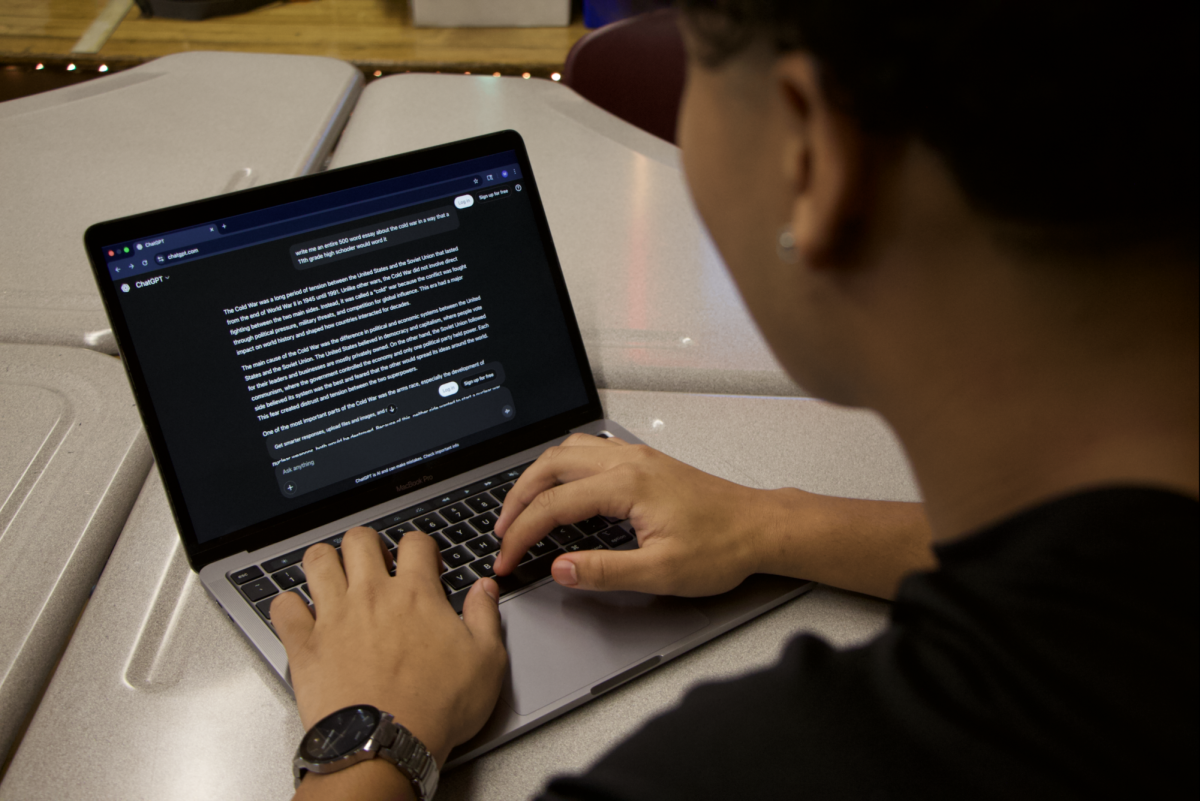
The use of AI by students has become a normalized technology, slowly integrating itself into daily learning routines. According to Briana Mendez-Padilla from k12-dive.com, it is said that the number of teens who use ChatGPT to do their schoolwork doubled between 2023 and 2024, rising from 13% to 26%. Since its release in 2022, ChatGPT has become easily accessible to students. All you have to do is copy and paste your homework in the prompt box and within seconds you’ll get all of your answers. The chatbot can solve math problems, write entire essays, and summarize links. Although AI can be used to benefit a student’s learning and studying process, many instead use it to take shortcuts and formulate answers to turn in.
If you do decide to use AI, it can be responsibly used with the right prompts. For example, treat it as a learning partner that can help you brainstorm ideas rather than directly copy and pasting the answer into your assignment. This means using AI for starting points and then transforming it by expanding on the facts or interpreting it in your own way. Ask for explanations, feedback, and clarification on complex topics. And of course, make sure to always double-check your answers.
However, it is important to note that “no AI system can be 100% accurate—there will always be the possibility of false negatives and false positives”. We shouldn’t rely on a tool that isn’t always accurate without double checking the facts and unfortunately, we already know people aren’t double-checking their work. They take the information they’re given and turn it in due to laziness and lack of motivation.
This connection between tools like ChatGPT and education is much deeper than cheating and it’s more important now than ever. In a time where the literacy rate in the United States is declicing, the last thing we need is generative AI replacing our ability to think. Dana Goldstein, a New York Times Reporter says, “the percentage of eighth graders who have “below basic” reading skills according to NAEP was the largest it has been in the exam’s three-decade history — 33 percent,” This decline in literacy and rise in AI usage shows an overriding concern, reliance on AI tools students are weakening intellectual capabilities.
The consequences of relying on AI are endless. For example, academic dishonesty is starting to become normalized amongst students as roughly one-in-five teenagers who have heard of ChatGPT say they have used it to help them do their schoolwork. A major concern for teachers is the decline in students authentically completing their work. How are they meant to teach a classroom where students fake their abilities and when presented with tests get unusually low grades? Using AI undermines the purpose of assignments which are meant to train students on the subject or skills being taught. Teachers are unable to assess students on their understanding which has caused a rift in the education system and how we can overcome this problem.
Another consequence of over reliance on AI is how it weakens critical thinking and research skills. According to phys.org, “frequent AI users exhibited diminished ability to critically evaluate information and engage in reflective problem-solving.” Researchers suggest “cognitive offloading” as the culprit. Cognitive offloading is defined as using phones or the internet to reduce your brain’s mental effort. It has become incredibly common amongst kids today, creating new problems of dependency. Although momentarily students will believe they are completing their tasks, overtime they harm long-term learning and memory processes.
And this isn’t just about school, AI is destroying our ability to think by ourselves. Why do we feel the need to use ChatGPT for every little thing? A part of this issue is students not having the confidence to keep trying. It’s one piece of advice that was taught to me very early on; practice makes perfect, practice and repetition means improvement. Students nowadays don’t try and instead justify their cheating. Instead of ChatGPT, ask your teachers for help. Teachers are made to help students, their role is to guide you through your learning journey in order to improve and help you become confident.
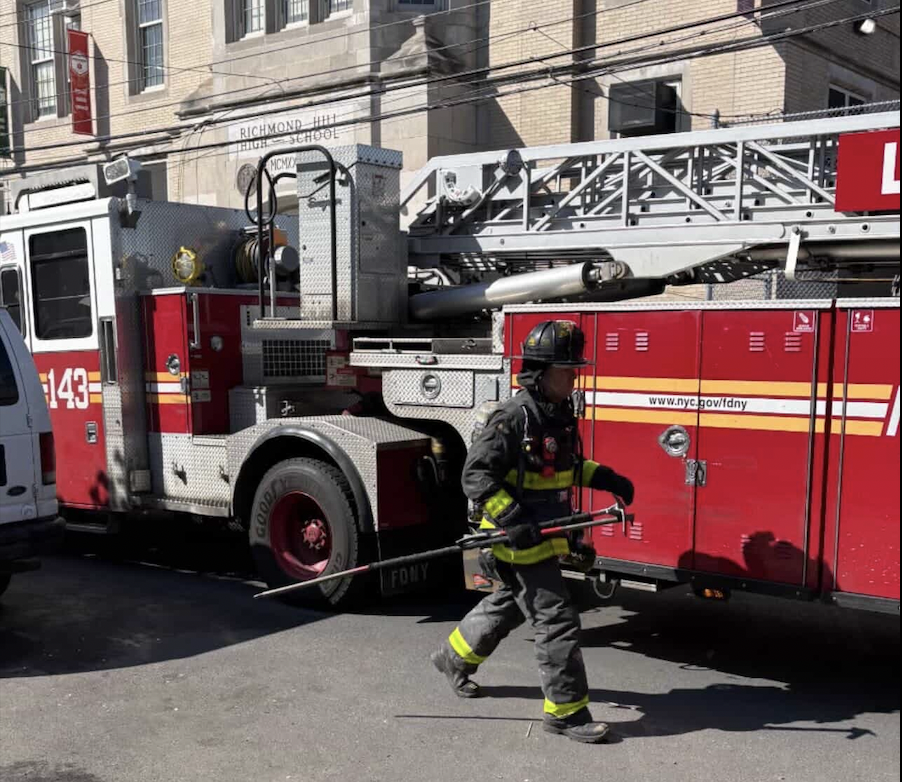
Richmond Hill High School has already made their expectations of students very clear – expectations that are placed on walls around the school and the school website. However, teachers need to also uphold these same values in the classrooms. In a situation where students are caught cheating, as in completely plagiarizing work from ChatGPT, teachers need to start holding them accountable by failing them and explaining why their behavior isn’t accepted in accordance to the student code of conduct.
Additionally, specific policies surrounding the use of AI should be developed in order to clarify where the school stands with this issue. We already know AI isn’t disappearing but advancing in its efficiency, therefore, our school should also focus on teaching students how to responsibly use AI in order to assist personalized learning. These changes could encourage students to understand how the responsible use of AI will help them in the long run.
This ongoing cultural shift, without intervention from the school, signals harm and instability for the future of learning. Without change in these patterns of over reliance on AI tools, we will observe a great decline in academic integrity. You are responsible for your education, your actions will determine how you learn to navigate the world. I hope you understand that you can change the way you approach schoolwork and training yourself to work without outside tools is a great start.